Fire Suppression Systems2026-10-12T14:16:31+00:00

FIRE SUPPRESSION SYSTEMS

Installation & Maintenance of Fire Suppression Systems

Fire Suppression Systems

What is a Fire Suppression System?

A fire suppression system is designed to control, suppress or extinguish a fire using an appropriate extinguishing agent. Depending on the design, the system may activate automatically or through a manual release arrangement.

In an automatically operated system, suitable fire detection equipment can send a signal to the suppression control panel, which initiates the appropriate warning and release sequence. The exact operation depends on the system and its safety requirements.

Fire suppression systems are used across a wide range of commercial environments, including restaurants, bakeries, offices and food manufacturing facilities.

Why Have a Fire Suppression System Installed?

A commercial fire suppression system can provide targeted protection for areas where a fire could cause significant damage, disrupt business operations or put people at risk.

Businesses may consider installing a fire suppression system for several reasons:

  • Insurance requirements – An insurer may specify additional fire protection for particular premises, equipment or activities.
  • Identified fire risks – A fire risk assessment may highlight hazards requiring specialist protection.
  • Automatic protection – Some systems can detect and respond to a fire without relying on a member of staff to operate an extinguisher.
  • Protection of valuable assets – Helping protect critical machinery, IT equipment, commercial kitchens and other important business assets.
  • Business continuity – Helping limit fire damage and the potential disruption caused by an incident.

Choosing the correct fire suppression system can be complex, as different environments require different methods of protection. SS Systems can assess your requirements and recommend suitable options for your premises.

Enquiry

Essential Points to Consider When Choosing a Fire Suppression System

Selecting the right fire suppression system involves understanding the risks associated with your premises, the equipment being protected and the practical requirements of the installation.

Important considerations include:

  • Occupancy: Is the protected area regularly occupied, or is it often left unattended?
  • Fire detection: What type of detection and activation arrangement is appropriate for the specific fire hazard?
  • Fire spread: Could a fire spread beyond the protected equipment or area?
  • Business interruption: What would a fire mean for production, equipment replacement costs and operational downtime?
  • System integration: Will the suppression system need to interface with fire alarms, ventilation, machinery or other building services?
  • Environmental considerations: Does your organisation have sustainability requirements that could influence the choice of extinguishing agent?
  • Post-discharge recovery: Will cleaning, ventilation, inspection or other recovery procedures be required after the system activates?
  • Agent availability: How quickly can the extinguishing agent be replenished and the system returned to service following a discharge?
  • Agent suitability: Which extinguishing method is appropriate for the hazard, and could the agent affect sensitive equipment or materials?
  • Room integrity: For gaseous suppression systems, can the protected enclosure retain the required agent concentration?
  • Occupant safety: What warnings, evacuation procedures and safety controls are required before and during activation?

Considering these factors early in the process can help identify a suitable fire suppression solution and avoid unnecessary disruption or additional costs during installation.
Frequently Asked Questions For Commercial Fire Suppression Systems

A fire suppression system is a fixed fire protection system designed to control, suppress or extinguish a fire using an appropriate extinguishing agent.

Depending on the system, this may involve water mist, inert gas, clean agents or specialist chemicals. Some systems activate automatically following fire detection, while others may also provide manual activation.

The appropriate system depends on the fire hazards, building layout, equipment being protected and the requirements of the premises.

A fire suppression system may be appropriate where a particular hazard requires rapid or specialist fire protection, especially where manual firefighting would be unsafe or impractical.

Common reasons include:

  • Unoccupied areas – Protecting equipment or rooms where staff are not always present.
  • High-value equipment – Helping limit fire damage and business interruption in areas such as server rooms or specialist plant rooms.
  • Specific fire hazards – Providing protection tailored to commercial kitchens, machinery or other defined risks.
  • Insurance requirements – Meeting particular fire protection conditions specified by an insurer.

Fire suppression systems do not automatically replace fire extinguishers, sprinklers or other fire safety measures. The appropriate combination should be determined through a fire risk assessment and suitable system design.

Different fire suppression systems use different extinguishing agents depending on the hazards and environment being protected.

Common options include:

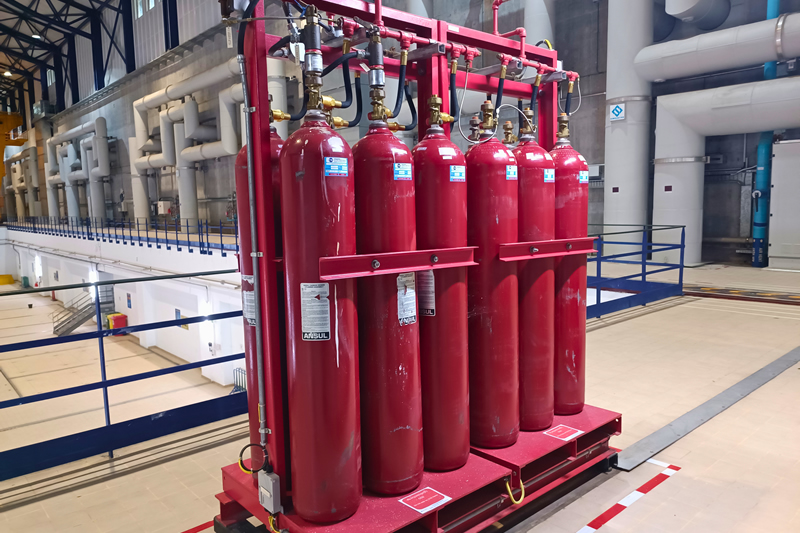
  • Inert gas systems – Use gases such as nitrogen or argon, or mixtures of inert gases, to reduce the oxygen concentration and suppress combustion.
  • Clean agent systems – Use specialist gaseous agents designed to suppress fires while leaving little or no residue.
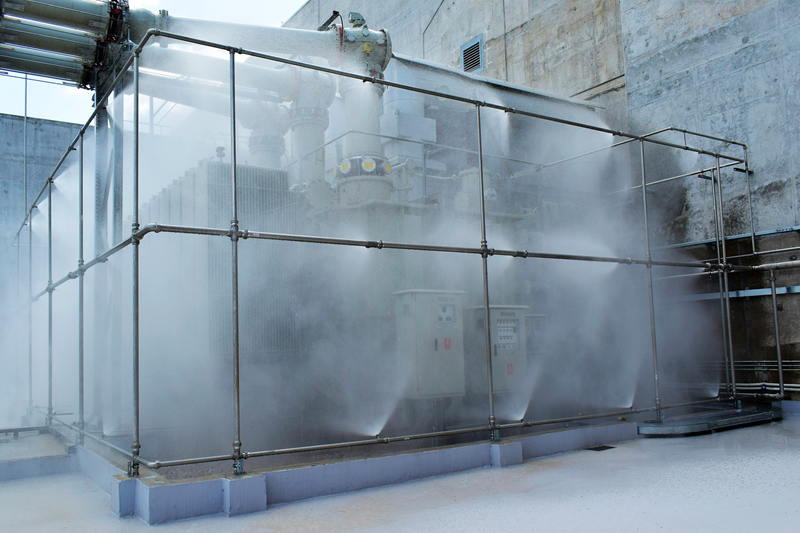
  • Water-mist systems – Use fine water droplets to absorb heat and help control or suppress a fire.
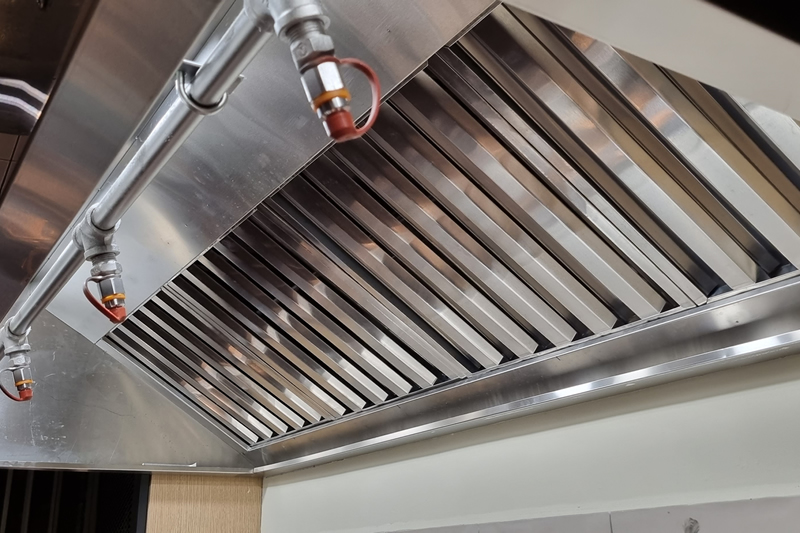
  • Kitchen fire suppression systems – Typically use specialist wet chemical agents to protect cooking appliances and associated extraction equipment.

The correct solution depends on the fire risk assessment, the system’s approved applications, occupant safety and the equipment or area requiring protection.

Choosing the right fire suppression system begins with understanding the specific risks associated with your premises.

Important considerations include:

  • Fire hazards – The materials, equipment and processes that could contribute to a fire.
  • Occupancy – Whether people are normally present in the protected area.
  • Building layout – The size, ventilation and physical characteristics of the space.
  • Business continuity – The potential impact of fire damage, system discharge and operational downtime.
  • System compatibility – How suppression will interact with detection, alarms, ventilation and other building systems.
  • Environmental considerations – The characteristics, availability and disposal requirements of the extinguishing agent.

A site survey and appropriate fire risk information help determine a suitable system specification for your premises.

The design process generally begins with a site survey and review of the hazards requiring protection.

Key steps may include:

  • Assessing the building, equipment and areas requiring protection.
  • Reviewing the fire risk assessment and any relevant insurer requirements.
  • Selecting an appropriate suppression method and extinguishing agent.
  • Considering fire detection, activation arrangements and manual controls.
  • Reviewing interfaces with alarms, ventilation and other building services.
  • Assessing occupant safety, room integrity and any pressure-relief requirements.
  • Planning installation, commissioning, servicing and business continuity arrangements.

The final design should reflect the relevant standards, manufacturer requirements and the specific application.

Fire suppression systems require appropriate inspection, testing and servicing to help ensure they remain operational and ready to respond.

Following a discharge, the system must be assessed by a competent specialist before being returned to service. Depending on the system, this may involve replacing or refilling extinguishing agent containers, checking components, investigating the cause of activation and recommissioning the installation.

Recharge times vary according to the agent, equipment and availability of replacement components. Businesses should consider potential downtime and suitable contingency arrangements as part of their fire safety and business continuity planning.

Yes. Occupant safety is an essential consideration when designing and operating a fire suppression system.

Some gaseous systems can create hazards if the extinguishing agent is released while people are present. Depending on the system and application, appropriate safeguards may include warning signs, audible and visual pre-discharge alarms, evacuation delays, manual controls and procedures for preventing unsafe re-entry.

Staff should understand the relevant warnings and evacuation arrangements. The system must be designed and maintained with reference to the applicable standards and the risks associated with the protected space.

Fire suppression systems can be connected to suitable fire detection and control equipment so that a fire condition triggers the appropriate response.

Depending on the system design, this may include automatic agent release, pre-discharge warnings, notification to a fire alarm system, shutdown of equipment or control of ventilation.

Not every system uses the same activation method or interfaces directly with the building’s main fire alarm panel. The arrangements should be designed around the particular suppression technology, protected risk and applicable safety requirements.

Yes. Specialist fire suppression systems can be considered for heritage buildings, data centres, electrical rooms and other environments containing sensitive or valuable assets.

The appropriate solution depends on the nature of the building, its fire risks, occupancy, ventilation and the potential effects of the extinguishing agent.

For heritage premises, the design may also need to consider listed building restrictions, the protection of historic materials and the impact of installation work. A suitable assessment is essential before selecting a system.

Before selecting a fire suppression system, check that the proposed equipment and installation are appropriate for the hazards and relevant standards.

Important documentation may include:

  • Design information – The system specification, protected areas and design assumptions.
  • Commissioning records – Evidence of the checks and tests completed before handover.
  • Operating instructions – Information about activation, warnings, manual controls and safe operation.
  • Maintenance requirements – Inspection and servicing schedules, together with relevant manufacturer instructions.
  • Agent and equipment information – Details of the extinguishing agent, containers and applicable certifications.
  • Training and handover records – Confirmation that relevant staff understand the system and emergency procedures.

Check the provider’s competence and any relevant third-party certification for the specific type of work. Where applicable, confirm the proposed arrangements with your insurer before installation.

Advice When Considering Commercial Fire Suppression Systems for Your Business

Before investing in a fire suppression system, review your premises’ fire risk assessment and identify the specific hazards requiring protection.

Important considerations include:

  • Fire hazards – The materials, machinery or activities that could cause or contribute to a fire.
  • Areas requiring protection – Such as server rooms, commercial kitchens, plant rooms or specialist production equipment.
  • People at risk – Whether the protected space is occupied and how people would evacuate safely.
  • Existing fire protection – Whether suppression is needed alongside fire detection, alarms, sprinklers or other precautions.

A suitable assessment helps determine whether specialist suppression is appropriate. The system must then be designed for the specific application and relevant standards.

Fire suppression systems are designed to control, suppress or extinguish fires using an agent suited to the protected risk. Some operate automatically following fire detection, while others also provide manual activation.

Common types include:

  • Clean agent systems – Use specialist gaseous agents that can suppress fires without leaving significant residue. Suitability depends on the agent and application.
  • Inert gas systems – Use gases such as nitrogen, argon or approved mixtures to reduce oxygen concentration and suppress combustion.
  • Water-mist systems – Use fine water droplets to absorb heat and help control or suppress fire.
  • Wet chemical systems – Commonly used in commercial kitchens to protect cooking equipment and associated hazards.

Fire suppression is not necessarily an alternative to sprinklers. Different technologies provide different types of protection, and the correct approach depends on the fire risk and system design.

Different environments present different fire hazards, so fire suppression should be selected for the specific risk rather than using a single approach across every building.

Examples include:

  • Data centres and communications rooms – May benefit from a suitable gaseous suppression system where residue and equipment damage are important considerations.
  • Commercial kitchens – Often require specialist wet chemical suppression designed for cooking appliances and extraction equipment.
  • Manufacturing and industrial premises – May need targeted protection for particular machinery, processes or high-risk areas.
  • Heritage buildings and museums – Require careful consideration of the building fabric, valuable contents and potential effects of system discharge.

System suitability depends on the hazards, occupancy, building conditions, approved applications and relevant standards. A site survey can help identify the most appropriate options.

A fire suppression system should be designed to work appropriately with the fire detection, warning and control arrangements serving the protected area.

Depending on the installation, this may involve dedicated detection and releasing controls, connections to the building’s fire alarm system, equipment shutdowns or ventilation controls.

The activation method and system interfaces must be suitable for the suppression technology and the particular fire hazard. Not every system requires a direct connection to the building’s main fire alarm panel.

Ask your provider to explain how the system will detect a fire, initiate the correct response and communicate warnings to building occupants.

Occupant safety must be considered throughout the design and operation of a fire suppression system.

Depending on the system and protected area, important safeguards may include:

  • Pre-discharge warnings – Audible and visual signals that alert occupants before agent release.
  • Evacuation arrangements – Clear procedures for leaving the protected area safely.
  • Appropriate release controls – Automatic and manual activation arrangements suited to the system design.
  • Ventilation and re-entry procedures – Measures for managing conditions following a discharge.
  • Staff training – Ensuring relevant employees understand warnings, controls and emergency actions.

Some gaseous agents can create hazards in occupied spaces, including reduced oxygen concentrations. The necessary safeguards depend on the agent, design concentration, occupancy and applicable standards.

Fire suppression systems need appropriate inspection, testing and maintenance to help ensure they remain ready for use.

When planning maintenance, consider:

  • Routine servicing – Arrange inspections and maintenance at intervals appropriate to the system and relevant standards.
  • Post-discharge work – Allow for inspection, agent replenishment, component replacement and recommissioning where required.
  • Agent availability – Check potential lead times for replacement agents or cylinders.
  • Business continuity – Plan how the protected area will be managed if the system is temporarily unavailable.
  • Maintenance records – Keep evidence of servicing, faults, corrective actions and system changes.

Recharge times vary by system and agent. Discuss expected lead times and contingency arrangements with your provider rather than assuming a fixed return-to-service period.

Fire suppression systems should be designed, installed, commissioned and maintained in accordance with the standards applicable to the specific technology and application.

Relevant standards may include:

  • BS EN 15004 – Relevant requirements for gaseous fire-extinguishing systems.
  • BS 8489 – Relevant requirements for industrial and commercial water-mist systems.
  • Other applicable standards – Depending on the suppression method, protected risk and equipment selected.

When choosing a provider, check its technical competence, experience and any relevant third-party certification covering the particular work required.

Important: BAFE registration or other certification should only be claimed for the specific scheme and scope held by the organisation. Certification supports confidence in competence but does not guarantee that every installation will be compliant.

The environmental characteristics of a fire suppression agent should be considered alongside fire performance, occupant safety and equipment compatibility.

Different agents have different environmental impacts, including potential greenhouse gas effects, regulatory restrictions and disposal requirements.

Inert gas systems and certain water-based technologies may offer advantages for suitable applications. However, no suppression method should automatically be described as environmentally friendly without considering the specific agent, system design and lifecycle impact.

Ask your provider about current agent availability, environmental regulations, maintenance requirements and any future restrictions that could affect the system.

Fire suppression systems can require additional space, equipment and building modifications. These should be considered before the final system design is agreed.

Depending on the technology, requirements may include:

  • Agent storage – Space for cylinders, containers or other equipment.
  • Pipework and discharge points – Suitable routes and positions for nozzles and distribution equipment.
  • Room integrity – Appropriate enclosure conditions for systems that depend on retaining an extinguishing gas.
  • Pressure relief – Measures to manage pressure changes during gaseous agent discharge, where required.
  • Ventilation controls – Interfaces or procedures needed before, during or after activation.
  • Maintenance access – Safe access for inspections, servicing and replacement components.

Discuss these requirements during the survey and design stages to help avoid unexpected installation work or disruption.

The initial installation cost is only one part of the long-term cost of a fire suppression system.

When comparing options, consider:

  • System design, equipment and installation costs.
  • Routine inspection, testing and servicing.
  • Agent or cylinder replacement following a discharge.
  • Replacement parts and ongoing equipment availability.
  • Staff training and operating procedures.
  • Potential disruption while the system is unavailable for maintenance or recharge.
  • Future changes to the protected area or business operations.

A suitable system should balance effective fire protection with practical maintenance, operational needs and long-term affordability.

Employees working in or around a protected area should understand how the suppression system operates and what to do in an emergency.

Training should cover, where relevant:

  • How to recognise system alarms and pre-discharge warnings.
  • What to do if the system activates or discharges.
  • Evacuation routes and safe assembly arrangements.
  • Who is authorised to operate manual controls.
  • How to report faults, damage or accidental activation.
  • Why staff must not re-enter a protected area until it has been confirmed safe.

Review training when the system, protected equipment or emergency procedures change. The priority should always be the safety of building occupants.

Working with an experienced fire suppression provider can help ensure that the proposed system is appropriate for the risks and practical requirements of your premises.

When selecting a provider, look for:

  • Relevant experience – Knowledge of the suppression technology and environments similar to yours.
  • Appropriate competence – Suitable training, technical expertise and relevant certification where applicable.
  • Clear system design – An explanation of the proposed protection, activation method and safety arrangements.
  • Integration capability – Experience coordinating suppression with detection, alarms and other building systems.
  • Ongoing support – Suitable servicing, maintenance and post-discharge arrangements.

SS Systems provides fire suppression installation and maintenance services and can help businesses explore suitable solutions for their premises.

Bonus Tip: Review your suppression system whenever significant changes are made to the protected area, equipment, building layout or business operations. These changes may affect the system’s suitability and could require a design review or modifications. Continue with the inspection and servicing schedule recommended for your particular installation.
Smarter Access & Security With Electronic Access Control

By |August 12th, 2026|Categories: News|Tags: , , , , |

As security needs continue to evolve, businesses and organisations are moving beyond traditional locks and keys in favour of smarter, more flexible solutions. Electronic Access Control Systems (EACS) provide greater control over who can enter a building and when, while offering valuable features such as real-time access management, audit trails, temporary permissions, mobile credentials and integration with CCTV, alarms and other security systems.
Questions To Ask If Your Fire Alarm Was Installed Before 2006

By |August 5th, 2026|Categories: News|Tags: , , , , |

If your fire alarm system was installed before 2006 using twin and earth (T&E) cable, it may still be operational but it does not comply with current British Standard BS 5839-1:2017. While older installations are not automatically considered unsafe, they should be inspected by a qualified fire alarm engineer, supported by an appropriate risk assessment and maintenance plan. In most commercial, communal, or multi-occupancy buildings, T&E cabling used for sounder and detection circuits should be replaced, particularly if the system is being upgraded, extended, or modified, to meet current fire safety standards.

OUR PARTNERS

SS Systems partner with leading UK based manufacturers to ensure that the fire detection and alarm systems we provide are at the forefront of current technology, along with being the most reliable our industry has to offer.

Externally Monitored to Ensure that we meet a High Standard of Service.

As members of the SSAIB (Security Systems and Alarms Inspection Board), We maintain service records and monitor our success. The SSAIB, is a leading certification body for organisations providing security systems and services, fire detection alarm systems, and monitoring services. So, you can be confident that we strive to provide our clients with a reliable and professional level of service.
Go to Top