
Posted March 12, 2026
5 Likely Changes Impacting Fire Suppression Over The Coming Years
Based on current research, market reports and technological trends, here are 5 additional likely changes in the fire extinguisher and fire suppression industry over the next 5–10 years, plus an assessment of how likely they are to go mainstream and the possible impact on end users.
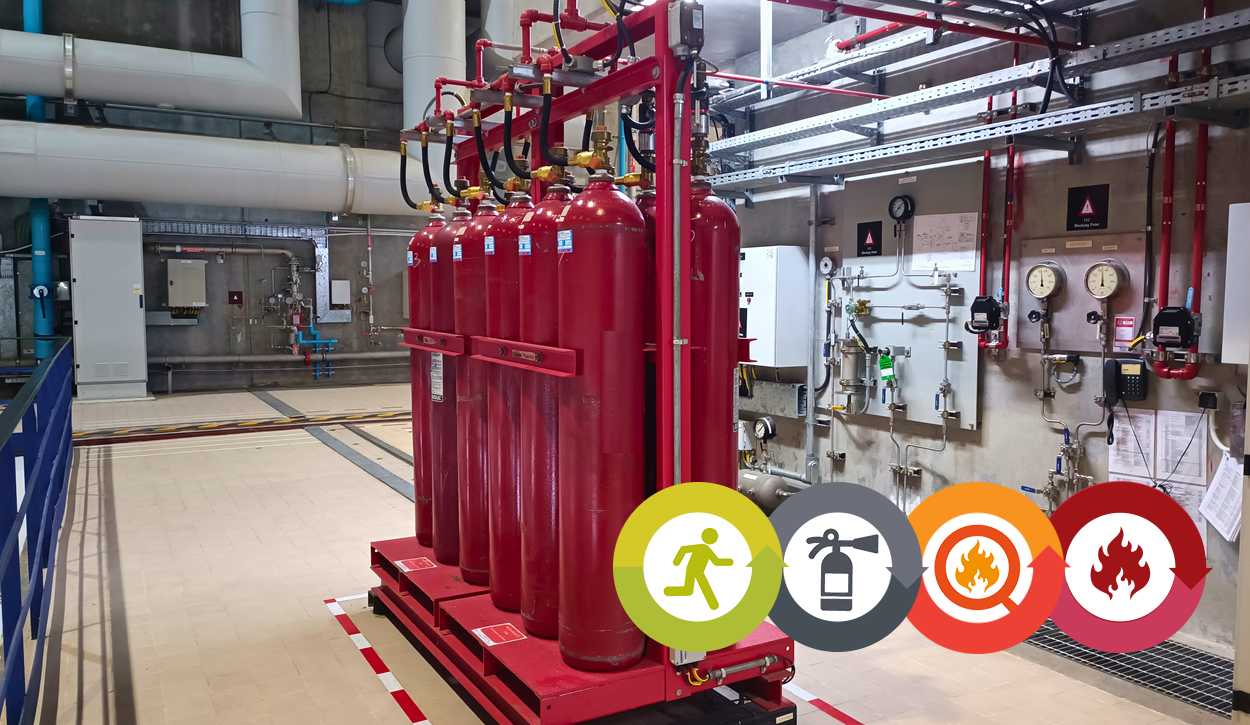
Future changes likely in the next 5–10 years
- Widespread adoption of IoT (Internet of Things) and AI enabled “smart” fire suppression systems. What is changing:
- Fire safety is shifting from manual, standalone extinguishers to integrated, connected systems. According to market forecasts, future extinguishers will incorporate IoT enabled features such as real time monitoring, automated alerts, predictive maintenance, and remote diagnostics.
- More broadly, fire suppression systems (not just handheld extinguishers) will integrate sensors, AI-driven analytics, and building wide monitoring platforms. This integration will enable early detection, automated responses (sprinklers, gas, mist), and rapid alerting to occupants or emergency services.
- Likelihood: High. Many industry sector reports already see smart/integrated systems as a core growth driver.
- Impact on end users:
- Better safety: fires can be detected earlier, even before flames are visible, reducing damage, risk to life, and response time.
- Lower maintenance burden: automatic alerts when maintenance, recharging or replacement is needed.
- Higher upfront cost: such systems may be more expensive than traditional extinguishers, potentially affecting small homeowners or small businesses more.
- More convenience, especially for larger residential buildings, flats/apartments, offices, as fire safety becomes partly “managed” by automated systems rather than relying solely on manual inspection.
- Broad shift toward environmentally friendly, “clean” extinguishing agents and sustainable suppression technologies. What is changing:
- Traditional chemical agents (especially those with ozone depleting or environmentally harmful properties) are being phased out replaced with “clean agents,” inert gases, water mist systems, biodegradable foams, and other low impact suppression media.
- Hybrid technologies are emerging extinguishers or suppression systems that combine more than one extinguishing mechanism (e.g. foam + inert gas + water mist) to handle different fire classes more efficiently.
- Also innovations in nanomaterials and advanced discharge mechanisms promise higher efficiency with less agent (~less environmental impact) per use.
- Likelihood: High to moderate. Given global trends toward environmental regulation and pressure on industries to reduce ecological footprint, this shift seems likely to accelerate. Many markets already report rising demand for eco friendly suppression agents.
- Impact on end users:
- Safer for people and environment: less toxic or no residue agents reduce health / environmental risks, important for homes, offices, data centres, hospitals.
- Less collateral damage: water mist or clean gas solutions minimise water damage or chemical residue, beneficial for homes, electronics and sensitive equipment.
- Potentially more versatile / effective protection across different fire types, especially in mixed use spaces (kitchens, electrical, combustible materials).
- Possibly higher costs initially (newer technology, premium materials), but over time might become standard.
- More compact, lightweight, and user friendly extinguishers (materials & design improvements) What is changing:
- The industry is moving toward using advanced, lightweight, corrosion-resistant materials (composite polymers, alloys) for extinguisher cylinders/containers, enhancing portability and durability.
- There is also development of compact “plug and play” or modular suppression units suitable for retrofitting older buildings, homes, small offices, not just industrial/commercial spaces.
- Likelihood: Moderate. As demand rises for residential and small business fire safety, lightweight and handy extinguishers offer a big advantage; manufacturers are responding.
- Impact on end users:
- Easier handling and installation, more likely to be used correctly by residents / non experts.
- Better suitability for homes, flats, older buildings, small offices.
- Could lead to increased adoption, people who avoided heavy, bulky extinguishers might purchase new, lighter ones.
- Lower maintenance overhead due to more durable materials (less corrosion, wear & tear).
Our team aims to deliver expert customer care, from site survey to completion through to ongoing maintenance. Developing a lasting relationship with a partner you can trust to protect you and your premises whilst ensuring your businesses and organisations are fully compliant to the latest legal requirements. We are CHAS accredited, BAFE registered and, SSAIB certificated with BS EN ISO 9001:2015 & Construction Line approved, so your organisation can be assured that all our fire, security and safety equipment is designed, supplied, installed and maintained in accordance with the latest British Standards.
#FireSuppresion #FireAlarms #FireRiskAssessment #FireSafetyEquipment #FireAlarmMaintenance #AccessControl #CCTV #SSSystems
