
5 Pending Changes For Emergency Lighting In The UK
Here are five of the main recently published or pending changes for the emergency‑lighting industry in the UK and how they could affect end users (building operators, occupants, visitors). Most stem from updates to standards and guidance rather than a single new “law,” but because emergency lighting links to fire‑safety regulations, they are quite consequential.
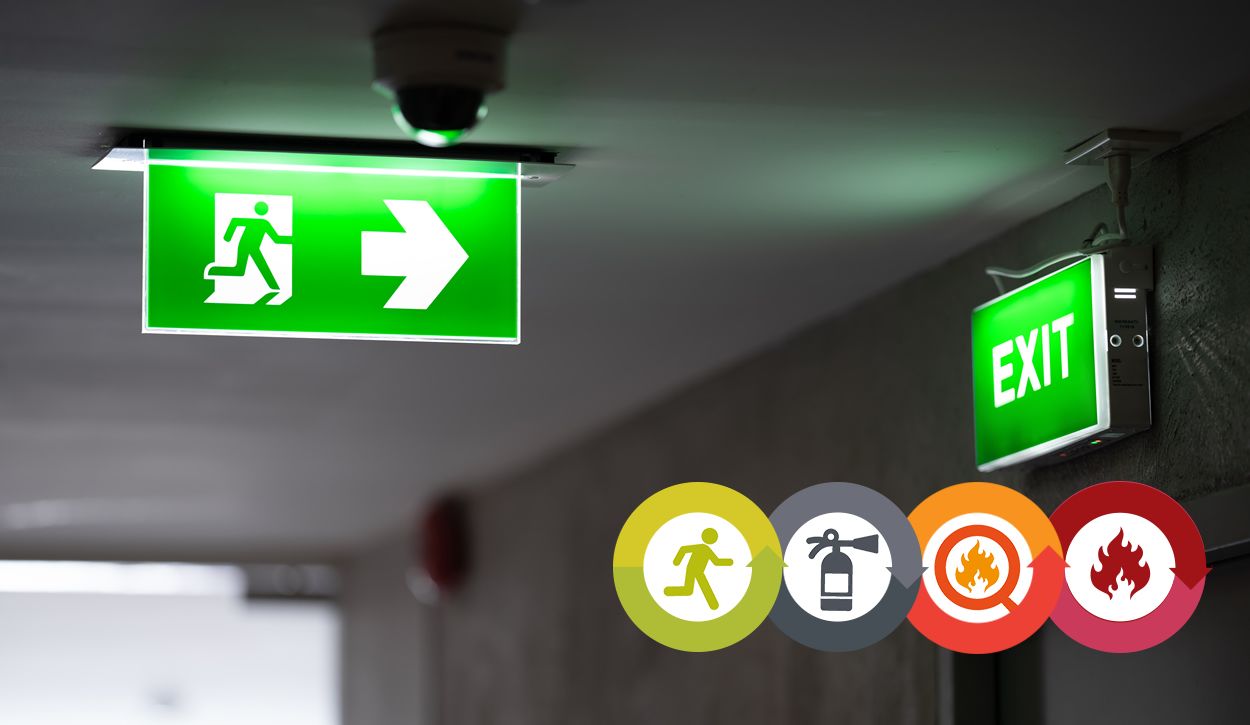
Five Key Changes / Developments
- Publication of BS 5266-1:2025 — a fully revised Code of Practice
- The long‑standing UK code for emergency lighting (previous version from 2016) has been replaced by BS 5266‑1:2025.
- The new version expands its scope: it now formally covers not just “escape/exit” lighting but also local‑area emergency lighting and standby lighting (i.e. lighting for use when normal supply fails but building remains occupied).
- For end users this means buildings designed under older codes might no longer meet “best‑practice” guidance; upgrades may be needed to align with modern standards.
Impact: Better safety coverage in a wider range of building‑use scenarios (not just escape but also continued occupancy or standby). However, building owners or managers may face increased cost and effort to review, redesign or retrofit luminaires to meet the new scope.
- Revised requirements for wiring, circuit integrity, and redundancy (dual‑circuit, fire‑resistant cabling, limited circuit loads)
- Under BS 5266‑1:2025, in high-risk areas emergency luminaires must be supplied by at least two separate circuits.
- Also limits no more than 20 luminaires should be affected by a single circuit fault (for centrally supplied circuits).
- Cabling routes must avoid high fire-risk zones where possible, and fire-resistant cables (e.g. 60- or 120-minute fire-rating) may be required for central power supply systems.
Impact: Increased reliability and resilience in emergencies. For end users occupants and visitors that translates to greater assurance that emergency lighting will still function even if part of the system fails or during a fire. For building owners/managers, it may require rewiring or upgrading existing lighting infrastructure, leading to additional installation or retrofit costs.
- Stricter photometric performance requirements and regular verification/testing including 5‑year full photometric testing
- The 2025 standard introduces a requirement that full photometric performance (i.e. actual measured light output and distribution) is verified at least every five years.
- Also, performance criteria for different types of spaces have been clarified: e.g. minimum lux levels for escape routes, open areas, high-risk areas, and critical points (fire alarms, exit doors, firefighting equipment).
- Duration/backup battery requirements for different building types have been clarified (e.g. 3-hour minimum for sleeping accommodations, entertainment venues, phased evacuation, etc.).
Impact: End users benefit from more consistent, reliable lighting in emergencies less risk of under‑lit escape routes, or battery failures. Buildings that haven’t been maintained/tested properly may be found non-compliant, forcing upgrades or maintenance. For building operators: more rigorous record‑keeping, maintenance, and possibly higher ongoing maintenance costs.
- Harmonisation with updated European standards: BS EN 50172:2024 and BS EN 1838:2024
- The UK emergency‑lighting standards revision has aligned with the 2024 editions of EN 50172 (emergency escape lighting systems) and EN 1838 (lighting applications – emergency lighting for buildings).
- The earlier conflicting or outdated national references have been withdrawn (or are to be withdrawn), meaning that compliance now depends on meeting these EN standards through the lens of BS 5266‑1:2025.
Impact: Buildings (new or refurbished) will increasingly be assessed against modern, international-style criteria — in effect raising the bar for safety. For end users and occupants, this should improve consistency and reliability of emergency lighting across different buildings (offices, public buildings, residential blocks). For property owners/managers, this may require reviewing older compliance assumptions and possibly upgrading older installations to meet the new harmonised standard.
- Enhanced documentation, testing protocols, commissioning & handover requirements — more rigorous maintenance & compliance oversight
- The revised standard tightens requirements around documentation and handover procedures at installation or after maintenance/inspection.
- More structured formats for verification, clearer guidance on testing intervals, system shutdown/recommissioning procedures (e.g. after prolonged shutdowns, ensuring protection from deep battery discharge) are specified.
- The standard emphasises the need for a full risk assessment as the foundation for lighting design.
Impact: For end users/building occupants, this should lead to better maintained lighting systems, lowering the risk of failures during emergencies. For building operators/facilities managers, it means more robust record-keeping, periodic audits, and potentially more resources (time, cost) dedicated to compliance, commissioning, and ongoing maintenance.
Why These Changes Matter and What Could Happen If They Are Ignored
- Improved occupant safety and peace of mind — With more rigorous standards, dual-circuit redundancy, defined lux levels, and regular testing, emergency lighting will be more dependable when needed most (power outage, fire, evacuation), reducing risks of panic, injury or poor evacuation visibility.
- Wider coverage — Because the scope now explicitly includes standby lighting and local-area lighting (not just escape routes), buildings used for mixed purposes (offices, hotels, residential blocks, care homes, leisure venues) are more likely to be better prepared for disruptions.
- Increased compliance and liability pressures on building owners/operators — Older installations may no longer meet the standard; failure to upgrade could lead to non-compliance, liability issues, or even enforcement actions under fire safety regulations. Maintenance and record‑keeping routines will likely need to improve.
- Cost implications — Upgrades to wiring, lighting units, routine photometric testing, maintenance contracts, documentation/logbooks, plus potential rewiring or retrofitting all mean increased capital and operational expenditure.
- Consistency across buildings — For users (tenants, visitors), this should lead to more predictable, uniform safety standards — less variance between older and newer buildings.
Who Is Most Affected
- Owners / managers of commercial, public, or multi‑occupancy buildings — offices, retail outlets, hotels, care homes, leisure venues, blocks of flats. They’ll need to audit and possibly upgrade lighting systems.
- Occupants / Employees / Visitors — they benefit from better safety, but may experience renovations, maintenance, or temporary disruptions during upgrades.
- Installers / designers / electrical contractors — increased demand for compliant installations, rewiring, testing, documentation and risk assessments.
- Insurers / compliance auditors / fire‑safety regulators — will use the new standards as reference benchmarks; non‑compliance could affect insurance, liability, building certificates.
Five Likely Future Changes (2026–2030)
- Broad adoption of smart / IoT‑enabled emergency lighting systems
- There is already movement in this direction: for example, Signify recently launched a wireless emergency‑lighting portfolio with a cloud‑based dashboard for monitoring and automated testing.
- In the near future, more emergency lighting systems will likely be built around networked “smart” lights that report status, automate regular testing, log compliance, and alert maintenance teams in real‑time when faults arise.
Impact:
- For building operators: big reductions in manual work (no more monthly or annual manual test logs), easier compliance, and faster fault detection.
- For occupants: improved reliability — lights are less likely to fail when needed, because faults get spotted and fixed promptly.
- Over time, lower maintenance costs and better safety record, especially in large or complex buildings.
- Shift to more advanced battery technologies (e.g. LiFePO₄) and long‑life, low‑maintenance luminaires
- There’s a clear trend towards using lithium iron phosphate (LiFePO₄) batteries instead of older chemistries (e.g. nickel‑cadmium) for emergency lighting.
- New generation emergency‑lighting units are already being marketed with longer warranties, improved optics, and self‑testing / self‑diagnosis features — reducing how often maintenance is needed.
Impact:
- For building owners/managers: lower maintenance burden, fewer lamp/battery replacements, reduced lifetime operating cost.
- For end users / occupants: more consistent reliability over long periods — less risk of battery failure or degraded lighting when emergencies occur.
- Over lifecycle, potentially significant cost savings (and reduced disruption) compared with older lighting/ battery systems.
- Integration of emergency lighting into broader “smart building” and building‑management systems (BMS), with cross‑system coordination (fire alarms, HVAC, security, occupancy sensors, etc.)
- As smart lighting and IoT control become standard, emergency lights are likely to become part of an integrated building “data spine” — linked to occupancy sensors, fire detection, security, and energy management systems.
- This could allow dynamic responses: for instance, in a fire, the system could automatically adjust lighting levels, guide occupants along safe routes, interface with alarms, or flash exit signs — all coordinated and intelligent.
Impact:
- Buildings become more “intelligent”: emergency lighting no longer sits as a standalone system but part of a coordinated, responsive safety network.
- Better safety outcomes — more adaptive responses, clearer evacuation routes, possibly better coordination in complex emergencies (fire, power outage, security incident).
- For building operators: potential to improve overall building performance, energy use, safety, and compliance; possibly fewer disparate systems to manage.
- Increased focus on sustainability, energy‑efficiency and circular design in emergency lighting
- Emergency lighting increasingly uses LED technology, which offers much lower energy consumption (up to 80% less than traditional sources) and much longer service life (e.g. 50,000+ hours vs 10 – 15,000 for fluorescents).
- Smart/emergency lighting systems will likely be designed with modularity, recyclability and energy‑saving in mind aligning with broader sustainability goals and possibly “green building” certification schemes.
Impact:
- Reduced operational costs (electricity and maintenance) over time for building owners.
- Reduced environmental impact fewer replacements, lower energy use, less waste which may be important for corporate sustainability commitments or regulatory pressures.
- For tenants/occupants: possibly lower energy costs (in buildings where lighting energy is shared), and contributing to a greener, more environmentally responsible organisation or housing provider.
- Wider regulatory and compliance evolution: stricter maintenance, testing & documentation facilitated by automation, plus possibly new standards for “smart” / “connected” emergency systems
- As automated / smart emergency lighting systems become available, regulators and standards bodies may update requirements to recognise remote self‑testing, automated fault reporting, and digital documentation. Indeed, some modern manufacturers emphasise self‑testing and dashboards to help fulfil compliance obligations.
- With newer battery tech and smarter luminaires, standards may evolve to encourage (or require) longer‑life batteries, regular diagnostics, and predictable maintenance cycles — reducing failures due to battery deterioration or human neglect.
Impact:
- For building operators / owners: easier to demonstrate compliance (digital logs, auto‑reports), potentially lower liability and better audit readiness.
- For safety regulators and insurers: clearer visibility on maintenance & performance, reducing uncertainty.
- For occupants: improved safety assurance — less chance of skipped or botched maintenance, higher reliability of emergency lighting when needed.
Why These Trends Are Likely and What’s Driving Them
- Technological advances: improvements in LED lighting, battery chemistry (LiFePO₄), IoT, cloud connectivity, sensors, and building‑management integration make “smart emergency lighting” both viable and cost‑effective.
- Economic incentives: lower lifetime cost (energy + maintenance) — appealing to building owners who want to reduce operational expenditure.
- Regulatory & compliance pressures: As building safety standards tighten, there will be increasing demand for robust, documented, reliable lighting — and smart systems make compliance easier to manage.
- Sustainability & green building trends: Pressure to reduce energy use, waste, and carbon footprint are pushing lighting systems to become more efficient and eco‑friendly.
- Growing complexity of buildings & mixed-use spaces: In large, multi‑tenant, or mixed‑use (residential + commercial + public) buildings, traditional manual-maintenance emergency lighting becomes harder to manage; smart, automated systems become more attractive.
What Could Go Wrong Risks or Challenges with These Changes
- Upfront cost: transitioning to smart, IoT‑enabled lighting + modern battery tech may involve higher initial capital expenditure.
- Complexity and reliance on software/communications: smart systems introduce software, connectivity, and potentially cybersecurity concerns.
- Legacy building compatibility: older buildings may need substantial rewiring or retrofitting to support modern lighting + IoT infrastructure.
- Regulatory lag: codes and regulations may take time to catch up with technological innovations; until then, there may be uncertainty about compliance.
- Maintenance of “smart” components: even though automation reduces manual labour, it introduces new maintenance requirements (firmware updates, network stability, battery replacements, data‑integrity).
What It Means for You (Given UK Context)
If you are responsible for a building (commercial, residential block, care home, public building, etc.), this likely means:
- Over the next 5 years, it will become increasingly cost‑effective and advisable to upgrade to smart/modern emergency lighting.
- Planning ahead: when refurbishing or doing maintenance, consider LED + LiFePO₄ + IoT‑enabled lighting rather than old-style systems.
- Budgeting: though capital cost may be higher, long‑term maintenance and energy savings — plus lower liability and easier compliance — can make it economically sound.
- Compliance readiness: automated test logs, remote monitoring, and datalogging will make compliance with standards easier and more demonstrable (good for insurers, audits, fire‑safety checks).
- For occupants/users: safer, more reliable escape/exit lighting, better building safety resilience, and more consistent maintenance outcomes.
Our team aims to deliver expert customer care, from site survey to completion through to ongoing maintenance. Developing a lasting relationship with a partner you can trust to protect you and your premises whilst ensuring your businesses and organisations are fully compliant to the latest legal requirements. We are CHAS accredited, BAFE registered and, SSAIB certificated with BS EN ISO 9001:2015 & Construction Line approved, so your organisation can be assured that all our fire, security and safety equipment is designed, supplied, installed and maintained in accordance with the latest British Standards.
#EmergencyLighting #FireAlarms #FireRiskAssessment #FireSafetyEquipment #FireAlarmMaintenance #AccessControl #CCTV #SSSystems
