
Rising Vehicle Fire Risks Across the UK Highlight Urgent Need for Enhanced Fire Safety
Fire safety professionals and fleet operators are being urged to strengthen vehicle fire risk controls following continued incidents of road vehicle fires across the UK during 2025 and into 2026. While vehicle fires represent a small proportion of overall road traffic activity, they continue to generate significant operational disruption, environmental damage, and safety risks to drivers and passengers.
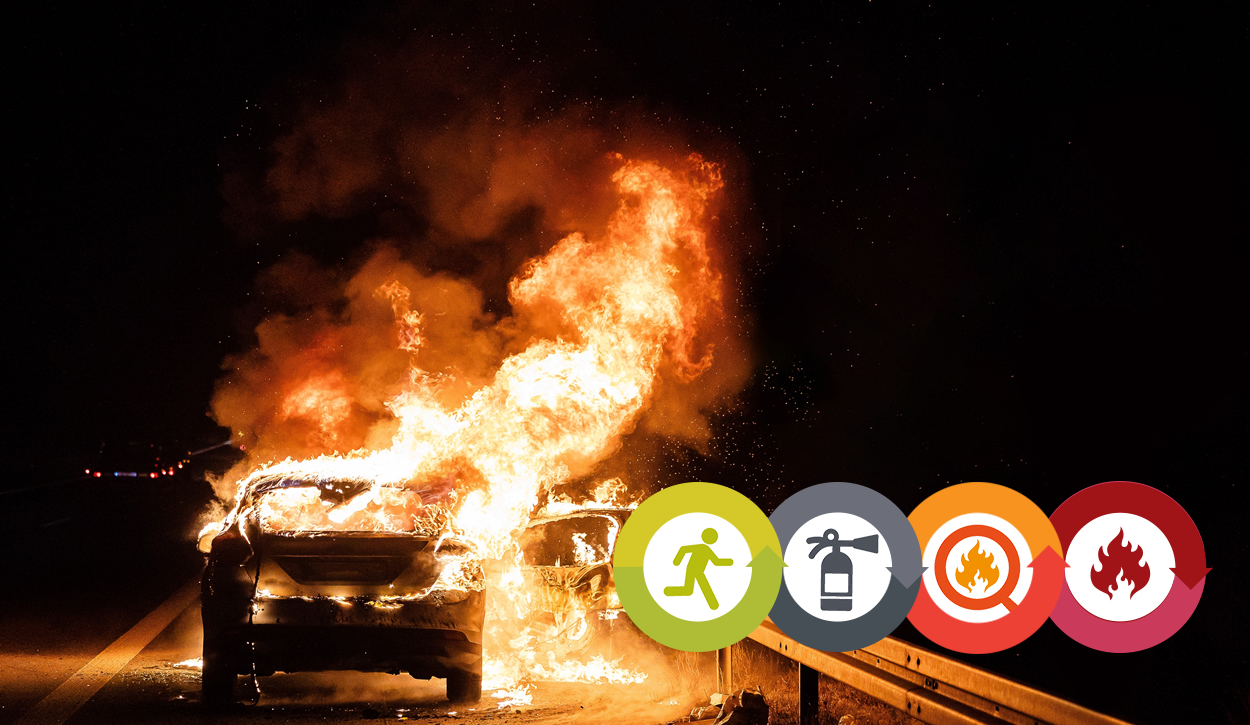
UK fire and rescue services continue to attend thousands of vehicle fire incidents annually, with road vehicles consistently forming a major category of emergency callouts. These incidents range from minor electrical faults to rapid, fully developed fires requiring immediate evacuation and specialist firefighting response.
Total road vehicle fires (UK / England FRS data) and Estimated Road Vehicle Fires:
- 2024 – 18,500–19,300
- 2025 – 18,400–19,500 (partial/rolling estimates)
Verified government benchmark (context) From the UK Fire and Rescue Services statistics (year ending 2024):
- Total fires attended: 136,702
- Road vehicle fires: 18,545
This confirms:
Vehicle fires consistently account for around 13–14% of all fire incidents attended by UK fire services. According to UK Government fire economics data:
- Total annual cost of all fires (UK): £12 billion
- Cost attributable to road vehicle fires: £358 – £364 million per year
- Average cost per vehicle fire: £17,000 – £18,000 per incident
Additional Information:
Impact on Fleet Operations and Industry Resilience
Fleet-based industries including logistics, construction, passenger transport, and service engineering are experiencing increasing pressure because of vehicle fire risks. Key operational impacts include:
- Loss of vehicles and high-value assets
- Unplanned downtime and disruption to supply chains
- Rising insurance premiums for commercial fleets
- Increased regulatory and client scrutiny on safety compliance
- Greater demand for documented fire safety procedures and training
Industry stakeholders report a growing expectation from insurers and clients that organisations demonstrate active fire risk mitigation strategies, including equipment provision, inspection regimes, and driver preparedness training.
Environmental Consequences Increasingly Under Scrutiny
Vehicle fires also present a significant environmental challenge. When vehicles burn, they release:
- Carbon monoxide and carbon dioxide emissions
- Toxic particulates from plastics and interior materials
- Hazardous compounds from fuel, oils, and synthetic materials
Firewater runoff from suppression efforts can also contaminate soil and drainage systems, creating secondary environmental risks. Additionally, fire-damaged vehicles are often rendered unsuitable for recycling, increasing waste management burdens.
The rise in complex vehicle technologies, including lithium-ion battery systems in electric and hybrid vehicles, has further increased attention on fire severity and environmental contamination risks in certain incident types.
Human Safety Remains the Primary Concern
Despite advances in vehicle safety design, fire incidents continue to pose serious risks to occupants. In many cases, the most critical factor determining outcomes is the speed of evacuation. Fire safety experts continue to emphasise that:
- The priority in any vehicle fire situation is immediate evacuation, not attempted firefighting.
- Delays in exiting a vehicle can significantly increase risk due to rapid fire growth, toxic smoke inhalation, and reduced visibility.
Industry Response: Strengthening Fire Preparedness in Fleets
Fire safety providers and fleet operators are increasingly implementing enhanced control measures, including:
- Installation of compliant vehicle fire extinguishers (BS EN 3 certified)
- Standardised extinguisher positioning for rapid access
- Routine inspection and maintenance schedules aligned with BS 5306 principles
- Driver and staff fire awareness training, including evacuation procedures
- Integration of fire risk assessments into fleet management systems
Fleet safety specialists highlight that effective fire safety is not dependent on equipment alone, but on a combination of training, accessibility, maintenance, and operational procedures.
Call to Action for Fleet Operators
Organisations operating vehicle fleets are being encouraged to review their current fire safety arrangements, with particular focus on:
- Driver readiness and training provision
- Equipment suitability for vehicle type and risk profile
- Maintenance compliance and documentation
- Emergency response and evacuation procedures
Proactive fire risk management is increasingly viewed as a key component of operational resilience, insurance compliance, and duty-of-care obligations under UK health and safety legislation.
Our team aims to deliver expert customer care, from site survey to completion through to ongoing maintenance. Developing a lasting relationship with a partner you can trust to protect you and your premises whilst ensuring your businesses and organisations are fully compliant to the latest legal requirements. We are CHAS accredited, BAFE registered and, SSAIB certificated with BS EN ISO 9001:2015 & Construction Line approved, so your organisation can be assured that all our fire, security and safety equipment is designed, supplied, installed and maintained in accordance with the latest British Standards.
#VehicleFires #FireSafety #FireAlarms #FireRiskAssessment #FireSafetyEquipment #FireAlarmMaintenance #AccessControl #CCTV #SSSystems
